Sports injury holding you back? Let’s get you back in the game.
Sports injuries happen at every age and every level. How serious they are depends on your sport and how the injury happened. Injuries may be part of the learning curve, but the pain doesn’t have to be.
Some injuries need rest. Others need you to keep moving to stop stiffness setting in. Knowing which is which makes all the difference.
Our team at Recover Physio will help you manage your pain and rebuild your confidence. We also offer complementary therapies for a more holistic approach.
What causes sports injuries?
Injuries can happen in training, in the gym or mid-match. Common causes include overtraining, poor conditioning, faulty technique and contact with another player. Skipping your warm-up and playing while tired both raise the risk.
We also see more and more “weekend athletes”. If you sit at a desk all week and then push hard in your sport at the weekend, your body may not be ready for the load.
Sports injuries differ from everyday injuries because they usually happen when your body is under pressure. That might be repeating a movement with poor posture or technique, such as running, swimming or swinging a club or racket. Or it might be a single maximal effort, such as sprinting, turning sharply in a football match or lifting a heavy weight.
Common sports injuries
There are many types of sports injury. Here are some of the ones we see most often:
Muscle strains
A strain, or pulled muscle, is one of the most common sports injuries. It happens when a muscle is overstretched and tears. Hamstrings, calves, quads, groin, lower back and shoulders are most often affected.
Strains range from mild to severe, and so does recovery. Our experienced sports physiotherapists can help you recover faster and reduce the chance of it happening again.
Torn knee ligaments (ACL and MCL)
The ACL (anterior cruciate ligament) holds the knee joint together and keeps it stable. A torn ACL is very painful and can make walking difficult. It is usually caused by a direct blow to the knee, a poor landing, or stopping and changing direction quickly. A physiotherapist can diagnose it. Many cases need surgery followed by physiotherapy rehabilitation.
The MCL (medial collateral ligament) connects the thigh bone (femur) to the shin bone (tibia). It is injured when the knee is forced sideways.
Shin splints
Shin splints cause pain along the inside of the lower leg. It is an overuse injury and very common in runners. If you have flat feet, you may be more prone to it.
Stress fractures
Stress fractures are another overuse injury. They happen when the muscles can no longer absorb the load, and the bone cracks under the strain. They usually affect the lower legs and feet, and are more common in female athletes.
Plantar fasciitis
Plantar fasciitis is inflammation of the tough connective tissue that runs from your heel to the front of your foot. It is usually caused by too much strain and stress.
Sprained ankle
An ankle sprain happens when the ligaments supporting the joint are overstretched. Common causes are a mistimed step, uneven ground, or twisting and rolling the ankle.
Tennis elbow
Tennis elbow is an overuse injury affecting the tendons on the outside of the elbow. It is common in racket sports, hockey and cricket.
Achilles and patellar tendinopathy
Tendons join muscle to bone. In these conditions, the tendons at the knee (patellar) or ankle (Achilles) become inflamed. Overuse and tightness in the surrounding muscles are common causes.
Repetitive strain injuries
These range from shoulder problems in swimmers and cricketers to knee, hip and ankle problems from running, kicking and jumping. They are very common when stiffness, muscle imbalance or poor technique is repeated over and over.
Lower back pain
Back pain, whether it comes on suddenly or gradually, is increasingly common in sport. It is usually linked to posture. For more information, see our back pain section.
These are just a few of the sports injuries we treat at Recover Physio. Seeing a sports physiotherapist can help you recover faster and help stop the pain coming back.
Our tips for preventing sports injuries
1
Always warm up before sport or heavy physical activity. Ask us if you’d like advice on the best warm-up for you.
2
Train with an experienced coach. They’ll help you learn the right technique and avoid overdoing it.
3
Build in rest days so your body can recover. Overtraining is a fast track to muscle strains and other injuries.
4
Start slowly. A sudden jump in activity puts a lot of strain on your bones, muscles and joints.
5
Listen to your body. Ease off at the first sign of pain or discomfort so you don’t make an injury worse.
6
Use the right kit for your sport. Many injuries are caused by the wrong footwear or equipment.
How we help: what to expect from your assessment
Full recovery can take weeks or months. We’ll diagnose your injury, then plan your rehab so you recover as quickly as possible without causing further damage.
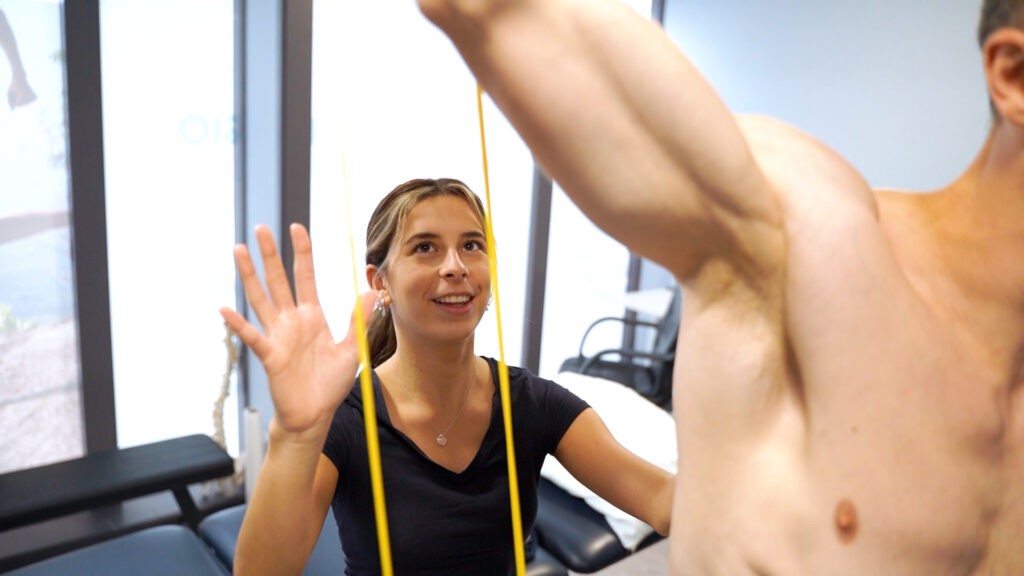
We gradually introduce stretching and strengthening exercises to help ease your pain and rebuild strength.
Your assessment has two parts. Together they give your physiotherapist what they need to treat you well, and give you a clear diagnosis and outlook.
- Talking it through: we ask about you, your symptoms, what caused or triggers your pain, and how it affects your work and leisure.
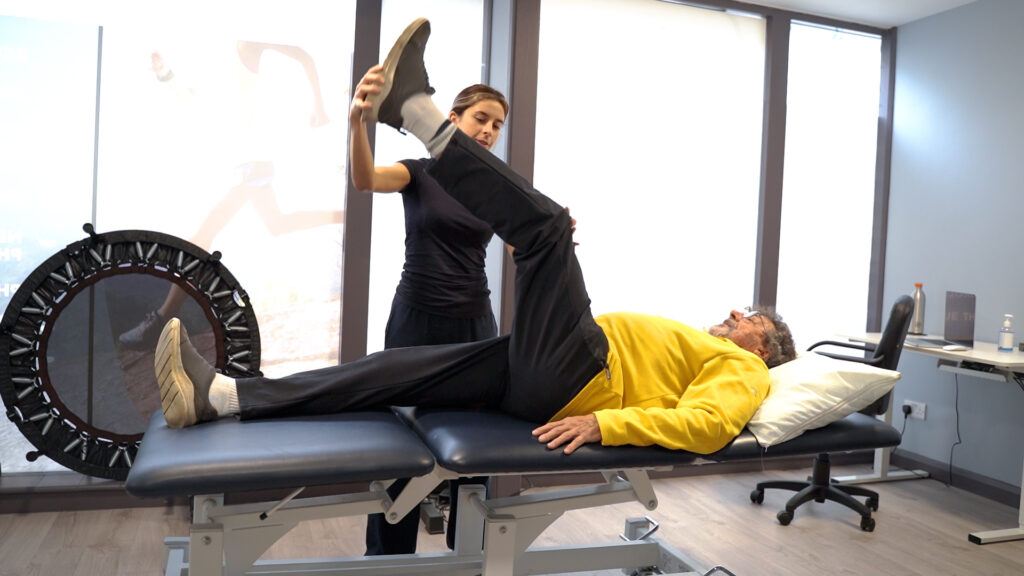
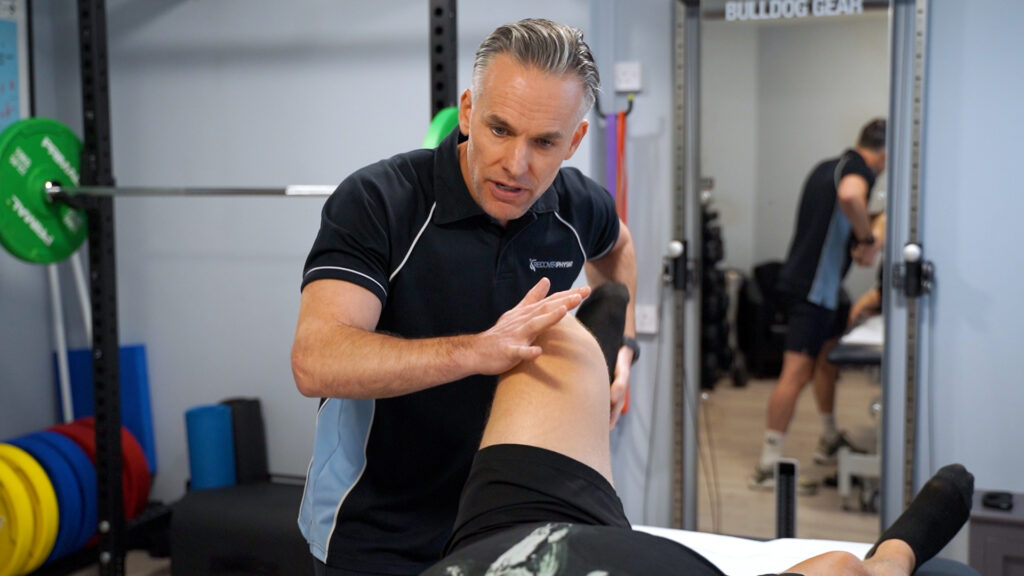
- Physical assessment: we typically check your posture, range of movement, muscle strength, reflexes, sensation, soft tissues and how the injured area moves. We also look at your wider movement to make sure the pain isn’t coming from somewhere else.
By the end, your physiotherapist will be able to explain what is causing your pain.
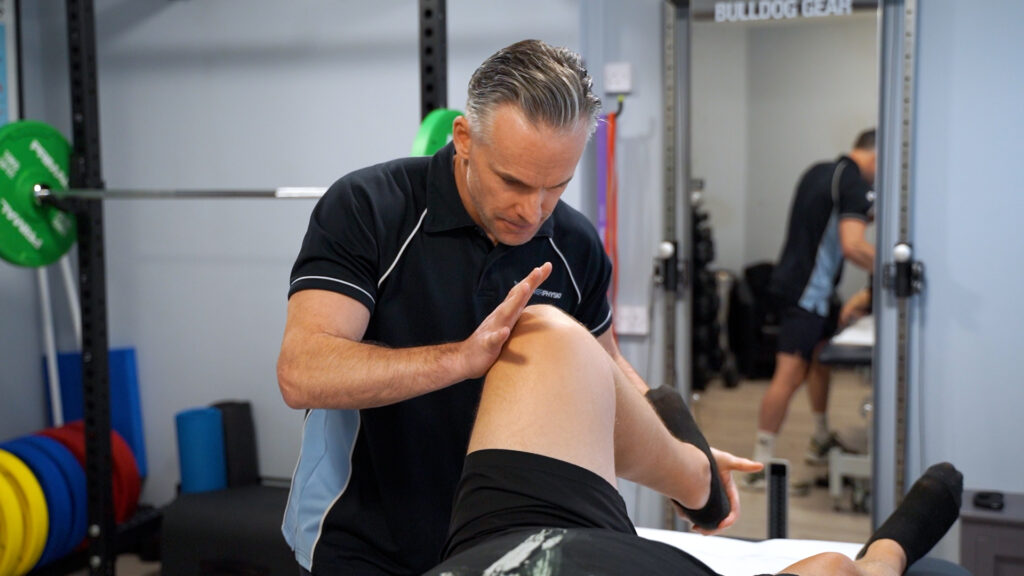
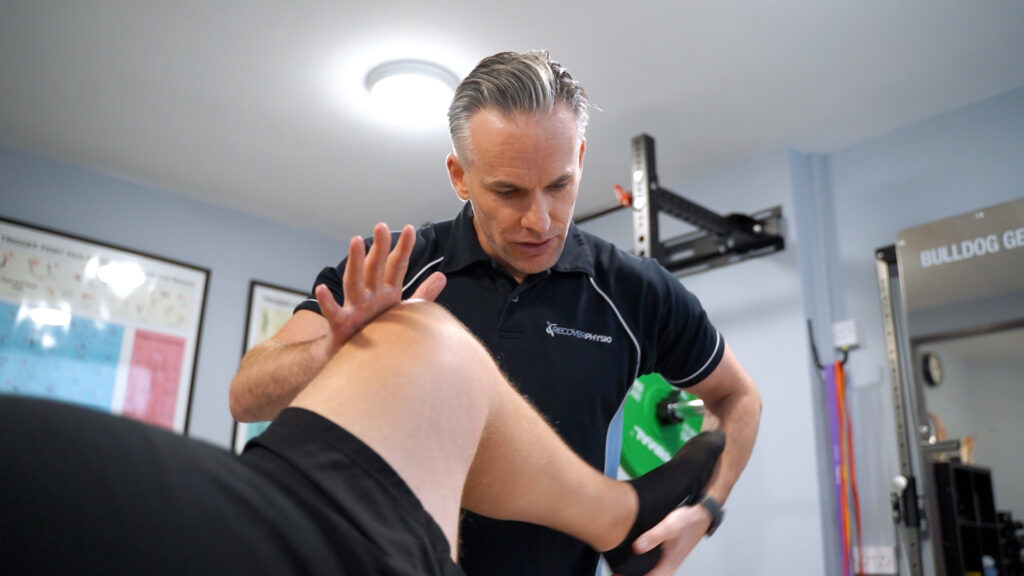
What does treatment involve?
You’ll get a treatment plan built around you. It is designed to reduce your pain and fit your circumstances and goals.
Treatment starts straight away to get your recovery moving. It may include a combination of:
- Manipulation
- Joint mobilisation
- Stretching and strengthening exercises
- Acupuncture
- Posture education
- Ergonomic advice for your home or workplace
- Home exercise programmes
- Massage
- Pain management
How physiotherapy helps sports injuries
Our aim is simple: to get you back to where you were before your injury, as quickly and safely as possible.
Physiotherapy can help with:
- Less pain, or none at all
- Better range of movement
- Reduced muscle spasm
- Easing nerve root compression
- Getting back to everyday activity